
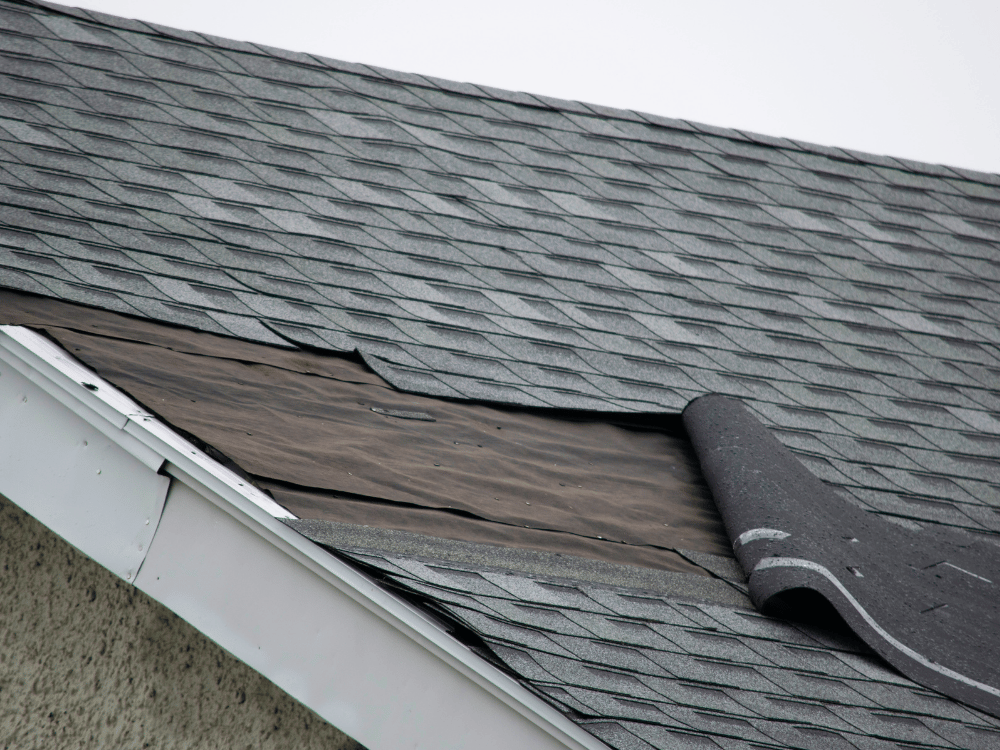
Roof Storm Damage Repair in Wilmington & Southeastern NC
Hurricanes, tropical storms, severe thunderstorms, and high winds are part of life on the North Carolina coast, and your roof takes the brunt of all of them. Twin Anchors Roofing helps homeowners across New Hanover, Brunswick, Pender, and Onslow counties find and fix roof storm damage before it turns into leaks, rot, and interior damage. We inspect your roof, document everything we find, and give you an honest plan for repairing it.
Fully Insured, Licensed North Carolina Contractor: License #L.104699
CLEAN, PROFESSIONAL INSTALLATION
Types of Storm Roof Damage We Handle
Every storm is different, and so is the damage it leaves behind. Here are the most common types of storm roof damage we see on coastal homes:
Roof Wind Damage
High winds can lift, crease, and tear shingles, or rip them off completely. Even when shingles settle back into place, the seal holding them down may be broken. Missing shingles and broken seals leave your roof exposed to rain during the next storm.
Shingle Damage and Missing Shingles
Shingle damage can include cracks, creases, curling, and granule loss. Missing shingles expose the underlayment and decking to the elements, and they are one of the most common reasons homeowners call us after a storm.
Roof Hail Damage
Hail is less common on the coast than wind, but severe thunderstorms can still bring it. Roof hail damage can bruise or crack shingles, knock granules loose, and dent vents, flashing, and gutters.
Roof Debris Damage and Roof Tree Damage
Flying debris and falling branches can puncture shingles, crack decking, and damage flashing. Roof debris damage is sometimes small and easy to miss. Roof tree damage is usually more serious and can affect the structure beneath the roof. Once a tree service has safely removed the tree, we inspect and repair the roof.
Storm-Related Leaks
Heavy, wind-driven rain can find its way through damaged shingles, flashing, and vents. Our roof repair team specializes in roof leak repair, tracing water back to its source so the fix actually holds.
Signs You Need a Roof Assessment After a Storm
Storm damage is not always obvious from the ground. It may be time to schedule a roof assessment after storm activity in your area if you notice:
- Shingles or pieces of shingles in your yard or driveway
- Shingle granules collecting in your gutters or downspouts
- New water stains on ceilings or walls, or damp spots in the attic
- Dented, loose, or bent flashing, vents, or gutters
- Branches or debris resting on the roof
- Sagging areas along the roofline
If a major storm has passed through, an inspection is worth scheduling even if you do not see any of these signs.
Our Storm Damage Inspection and Repair Process
Our process gives you a clear picture of what your roof needs.
- Inspection. We inspect your roof from top to bottom, including shingles, flashing, vents, and the areas most likely to be affected by wind and debris.
- Documentation. We photograph and video everything we find, so you can see the damage for yourself.
- Honest recommendation. We explain what we found and whether a targeted storm roof repair will solve the problem or a replacement makes more sense.
- Repair or replacement. Our team completes the work with care, and our project manager stays involved from start to finish.
- Final documentation. When the job is done, you get photos of the completed work.
When damage is widespread, or your roof was already near the end of its lifespan, storm roof replacement is often the better long-term choice. We will walk you through our roof replacement and installation process and help you compare materials, including asphalt shingles and metal roofing, which is designed to perform well in high winds when properly installed. If storms have damaged your gutters, we can also install new gutters as part of the project.
Storm Damage Roofing Services Across New Hanover, Brunswick, Pender & Onslow Counties
We help homeowners recover from storms throughout Southeastern North Carolina. In New Hanover County, we serve Wilmington and Carolina Beach. In Brunswick County, we work in Leland and Oak Island. We also serve Hampstead and Surf City in Pender County, along with Jacksonville, Holly Ridge, and the Onslow County side of Surf City.
Coastal communities feel the full force of hurricanes and tropical storms, while inland neighborhoods often deal with falling trees and wind-driven rain. Wherever you live in our service area, you get the same owner-involved team and the same documented process. Explore all of our residential roofing services to see how else we can help.

GET A FREE ESTIMATE
SHINGLE ROOF | METAL ROOF | GUTTERS | REPAIR | REPLACE
Roof Storm Damage FAQs
How do I know if my roof has storm damage?
Some storm damage is easy to spot, like missing shingles or a tree limb on the roof. Much of it is not. Lifted shingles, cracked seals, loose flashing, and small punctures are often invisible from the ground. Signs to watch for include shingles in your yard, granules in your gutters, new water stains on ceilings, and dented vents or flashing. A professional inspection is the most reliable way to know.
What should I do right after a storm damages my roof?
Make sure everyone is safe first. Stay away from downed power lines and do not climb onto the roof. If water is coming in, move valuables away from the leak and catch the water with buckets or towels. Take photos of any visible damage inside and outside your home, then schedule a roof inspection as soon as possible.
Can wind damage a roof even if no shingles are missing?
Yes. Strong winds can lift shingles and break the seal that holds them down, even if they settle back into place. Once that seal is broken, shingles are more likely to blow off or let water in during the next storm. This type of roof wind damage is hard to see from the ground, which is why an inspection matters.
Does coastal North Carolina get roof hail damage?
Hail is less common on the coast than wind damage, but severe thunderstorms can still bring hail to Southeastern North Carolina. Hail can bruise or crack shingles, knock granules loose, and dent metal components like vents and flashing. If a hailstorm moves through your area, it is worth having your roof checked.
What should I do if a tree falls on my roof?
Get everyone out of the affected area and stay away from any downed power lines. Contact your utility company if lines are involved, and have a qualified tree service remove the tree safely. Once the tree is removed, we can inspect the roof, document the damage, and repair or replace the affected areas.
Should I repair or replace my roof after storm damage?
It depends on how much damage there is and the condition of the roof before the storm. Damage limited to one area of an otherwise healthy roof can usually be repaired. Widespread damage, or damage to a roof that was already near the end of its lifespan, often makes replacement the better choice. We give you an honest recommendation based on what we find.
Can you document storm damage for my insurance claim?
We document every inspection with detailed photos and explain what we find, and you are welcome to share that documentation with your insurance company. Clear photos of the damage can help you have a more informed conversation with your insurer about your roof.
How soon should I schedule a roof inspection after a storm?
As soon as it is safe to do so. Even small storm damage can let water in slowly, leading to rotted decking, wet insulation, and interior damage over the following weeks and months. Scheduling an inspection soon after the storm helps you catch problems early.

The ultimate in storm-ready protection.
IBHS Fortified Roofs
For homeowners seeking next-level protection, we proudly install IBHS Fortified Roofs. This nationally recognized system strengthens your roof against severe weather, giving you peace of mind and potential savings on insurance.
WE PROVIDE INSURANCE CLAIM ASSISTANCE